Introduction
Choosing the wrong tactical backpack size can negatively impact mobility, carrying capacity, and mission performance.
Many buyers assume that a larger backpack is always the better option. In reality, the best tactical backpack size depends on mission duration, equipment requirements, and operational objectives.
In practice, we often see procurement teams purchasing oversized backpacks for patrol units, only to find that personnel rarely use the additional capacity. At the same time, selecting a backpack that is too small can create equipment limitations during training or deployment. The challenge is not choosing the biggest backpack, but choosing the right backpack for the mission.
A backpack that is too small may not carry enough equipment, while an oversized backpack can reduce mobility, increase fatigue, and create unnecessary load.
This guide compares small and large tactical backpacks to help military units, law enforcement agencies, and procurement teams select the most appropriate size for their missions.
Related Resources
• Military Backpack Capacity Guide
• What Size Tactical Backpack Do I Need
Why Backpack Size Matters More Than Most Buyers Think
When selecting a tactical backpack, capacity often has a greater impact on operational performance than materials, colors, or accessory features.
The right backpack size influences:
Mobility
Smaller backpacks improve movement speed and agility.
Equipment Capacity
Larger backpacks allow operators to carry additional gear and sustainment supplies.
Mission Efficiency
Properly sized backpacks improve equipment organization and accessibility.
User Comfort
Oversized packs often lead to unnecessary weight and increased fatigue.
Procurement Cost
Standardizing backpack capacities can simplify logistics and equipment management.
Why Small Tactical Backpacks Dominate Patrol Missions
One of the biggest misconceptions in tactical gear selection is that more storage automatically improves mission capability. For patrol teams, the opposite is often true.
When operators spend most of their time moving, entering vehicles, or responding quickly to incidents, excessive backpack capacity can become a disadvantage rather than a benefit.
Typical capacity range:
10L-30L
Most commonly used for:
- Urban Patrol
- Border Patrol
- Law Enforcement Operations
- Security Operations
- Range Training
Advantages Of Small Tactical Backpacks
Faster Movement
Less weight allows operators to move more efficiently.
Reduced Fatigue
Smaller loadouts place less strain on personnel during long patrols.
Better Agility
Particularly useful in urban and vehicle-based operations.
Faster Equipment Access
Essential gear is easier to organize and retrieve.
Typical Loadout
- Water
- Radio
- Medical Kit
- Ammunition
- Batteries
- Personal Equipment
Related Reading
• 20L vs 30L vs 45L Tactical Backpack
Why Large Tactical Backpacks Are Essential For Extended Operations
Large tactical backpacks become valuable when operators need to remain self-sufficient for extended periods.
Once missions extend beyond a single operational cycle, additional water, food, clothing, and sustainment equipment quickly consume available storage space.
In these situations, carrying capacity becomes more important than maximum mobility.
Typical capacity range:
45L-65L+
Most commonly used for:
- Military Training
- Field Deployment
- Multi-Day Missions
- Extended Operations
- Remote Area Operations
Advantages Of Large Tactical Backpacks
Greater Carrying Capacity
Supports larger equipment loads.
Extended Mission Support
Allows personnel to operate for longer periods without resupply.
Better Equipment Organization
More compartments and modular attachment points.
Greater Expansion Capability
Additional MOLLE pouches and mission-specific equipment can be added.
Typical Loadout
- Food Supplies
- Extra Water
- Additional Clothing
- Shelter Equipment
- Medical Supplies
- Communications Equipment
- Sustainment Gear
Related Reading
• Military Rucksack Size Guide
• 24 Hour Pack vs 72 Hour Pack
The Most Common Mistake Buyers Make
Many procurement teams assume that selecting the largest available backpack provides maximum flexibility.
In reality, oversized backpacks often create operational problems. Another common mistake is selecting a single backpack size for every mission profile.
While this may simplify purchasing, it often results in patrol personnel carrying oversized backpacks or deployment teams lacking sufficient storage capacity.
Mission requirements should drive capacity selection whenever possible.
For example:
A patrol officer carrying a 50L backpack may experience reduced mobility, increased fatigue, and lower mission efficiency compared with a properly configured 30L patrol pack.
The objective should not be to purchase the largest backpack.
The objective should be to purchase the backpack that best matches the mission.
Common Procurement Mistakes
• Selecting large deployment backpacks for personnel who primarily conduct patrol operations
• Using a single backpack size across all units
• Defining backpack requirements based on preference rather than mission duration
• Ignoring future equipment expansion requirements
Related Procurement Resource
• Military Backpack Capacity Requirements For Government Procurement
Real-World Example
Consider two personnel assigned to different missions.
A patrol officer working a vehicle-supported urban shift may only require water, communications equipment, and basic medical supplies.
A reconnaissance operator preparing for a 72-hour mission may need additional food, optics, batteries, and sustainment equipment.
Although both require tactical backpacks, their capacity requirements differ significantly.
Need Help Determining Capacity Requirements?
• How To Choose Backpack Capacity
Small Backpack vs Large Backpack Comparison
| Comparison Criteria | Small Tactical Backpack | Large Tactical Backpack |
| Typical Capacity | 10L–30L | 45L–65L+ |
| Mission Duration | Up To 24 Hours | 24–72+ Hours |
| Primary Purpose | Mobility & Daily Operations | Extended Operations & Deployment |
| Mobility | High | Medium |
| Equipment Capacity | Limited | High |
| Sustainment Capability | Low | High |
| Weight | Light | Heavy |
| MOLLE Expansion | Moderate | Extensive |
| Best Use Case | Patrol & Law Enforcement | Training & Field Deployment |
Related Guide:
Why Mission Duration Matters
Mission duration is often the most important factor when selecting backpack size.
As mission duration increases, personnel typically require additional food, water, clothing, and sustainment equipment.
For this reason, backpack capacity should be determined by operational requirements rather than personal preference.
In most cases:
• Less than 24 Hours = Small Tactical Backpack
• More than 24 Hours = Large Tactical Backpack
Further Reading
• How To Choose Backpack Capacity
• Military Backpack Capacity Guide
Which Backpack Size Is Better For Different Missions
Patrol And Daily Operations
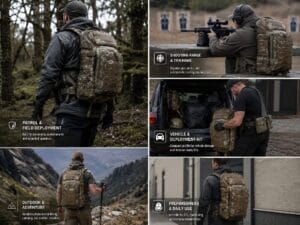
Small tactical backpacks are generally the better choice for patrol missions, law enforcement activities, and daily operations where mobility and rapid access to equipment are critical.
Military Training
Military training activities may require either a small or a large tactical backpack, depending on mission duration and equipment requirements.
Field Deployment
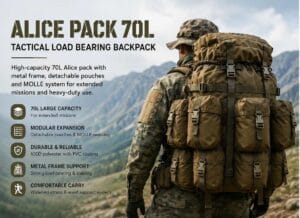
Large tactical backpacks are better suited for deployment scenarios because they offer additional capacity for food, extra clothing, and sustainment equipment.
Extended Operations
For missions lasting more than 24 hours, large tactical backpacks usually provide the carrying capacity required to support extended operations.
Quick Recommendation
Choose a small tactical backpack if mobility, speed, and daily operational efficiency are your priorities.
Choose a large tactical backpack if your missions require additional equipment, sustainment supplies, and extended operational capability.
As a general rule:
• Small Tactical Backpack = 10L–30L
• Large Tactical Backpack = 45L–65L+
Small Backpack Or Large Backpack, Which Should You Choose
Choose A Small Tactical Backpack If
- Missions last less than 24 hours
- Mobility is critical
- Equipment requirements are limited
- Personnel operate in urban environments
Choose A Large Tactical Backpack If
- Missions exceed 24 hours
- Additional sustainment equipment is required
- Field deployment is expected
- Equipment loads vary significantly
Related Guide:
Procurement Considerations For Tactical Backpack Projects
For procurement teams, backpack selection is rarely about individual preference.
The challenge is balancing operational requirements, standardization, and long-term equipment planning across multiple units.
Choosing backpack capacities based on mission profiles usually results in better equipment utilization and lower lifecycle costs.
Unit Standardization
Standardizing backpack platforms simplifies logistics, maintenance, and training requirements.
Equipment Compatibility
Backpacks should be compatible with hydration systems, communications equipment, and modular MOLLE accessories.
Mission Requirements
Different units may require different backpack capacities based on mission duration and equipment loads.
Future Scalability
Selecting platforms with modular expansion capability allows organizations to adapt to changing operational requirements.
Further Reading For Procurement Teams
• Military Backpack Capacity Requirements For Government Procurement
• Military Backpack Specifications Explained
• How To Compare Tactical Backpack Suppliers
Recommended Military Backpack Categories
Patrol Backpacks
Best for patrol units, law enforcement teams, and rapid response operations.
Internal Link → Patrol Backpacks
Assault Backpacks
Designed for military training, field deployment, and 72-hour missions.
Military Rucksacks
Suitable for extended deployment and sustainment operations.
Internal Link → Military Rucksacks
Frequently Asked Questions
Is A Larger Tactical Backpack Always Better?
No. Larger backpacks provide greater carrying capacity but can reduce mobility and increase fatigue during short missions.
What Size Tactical Backpack Is Best For Patrol Missions?
For most patrol missions, backpacks in the 10L–30L range provide the best balance between mobility and equipment capacity.
When Should I Choose A Large Tactical Backpack?
Large tactical backpacks are recommended for deployment, extended operations, and missions requiring sustainment equipment.
Can A Small Tactical Backpack Be Used For Military Training?
Yes. Many training activities can be supported by small tactical backpacks, although extended field exercises may require larger capacities.
Need Help Choosing The Right Backpack Size?
Need Help Selecting The Right Backpack Configuration?
Whether you are sourcing backpacks for patrol units, military training programs, or deployment projects, our team can recommend suitable backpack capacities based on mission duration, equipment requirements, and operational objectives.
Request A Capacity Recommendation