Introduction
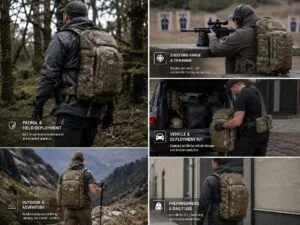
Military backpack capacity is one of the most frequently specified requirements in military and law enforcement procurement projects.
When developing military backpack requirements and military backpack specifications, procurement teams often focus on volume while overlooking other critical performance factors.
However, simply requesting a “30L tactical backpack” or a “65L military rucksack” often creates confusion during supplier evaluation.
Different manufacturers may measure capacity differently, resulting in significant variations in usable storage space even when the stated volume appears identical.
For procurement teams, selecting the correct backpack capacity is not only about storage volume. It directly impacts mission readiness, equipment carriage, mobility, and long-term operational performance.
For organizations involved in military backpack procurement, selecting the correct capacity is only one part of the evaluation process. Procurement teams must also assess supplier capabilities, manufacturing consistency, testing documentation, and long-term project support.
This guide explains common military backpack capacity requirements, typical procurement scenarios, and key supplier evaluation criteria used in government tenders.
Why Capacity Requirements Matter In Procurement
In military backpack procurement projects, capacity directly affects operational readiness, mobility, and the efficiency of equipment carriage.
Equipment Carrying Capability
The backpack must accommodate all mission-essential equipment without overloading personnel.
Mission Readiness
Insufficient capacity may force users to carry equipment externally, reducing operational efficiency.
Mobility and User Comfort
Oversized backpacks can restrict movement, particularly during patrol or urban operations.
Load Distribution
Properly designed backpacks distribute weight across the shoulders, back, and waist to reduce fatigue.
Lifecycle Performance
Selecting the correct capacity reduces equipment replacement costs and improves long-term user satisfaction.
What Capacity Is Commonly Required?
Government procurement projects generally fall into three major capacity categories.
| Capacity | Typical Mission | Duration |
| 20L–30L | Patrol & Law Enforcement | 8-24 Hours |
| 30L–45L | Assault & Training Missions | 24-72 Hours |
| 45L–65L+ | Deployment & Sustainment Missions | 3+ Days |
Although project requirements vary, 30L, 45L, and 65L remain the most commonly requested specifications in tender documents.
Capacity Selection By Mission Profile
| Mission Type | Recommended Capacity |
| Daily Patrol | 20L–30L |
| Law Enforcement Operations | 30L |
| Military Training | 30L–45L |
| 72-Hour Missions | 45L |
| Multi-Day Deployment | 65L+ |
| Reconnaissance Operations | 65L+ |
30L Military Backpack Requirements
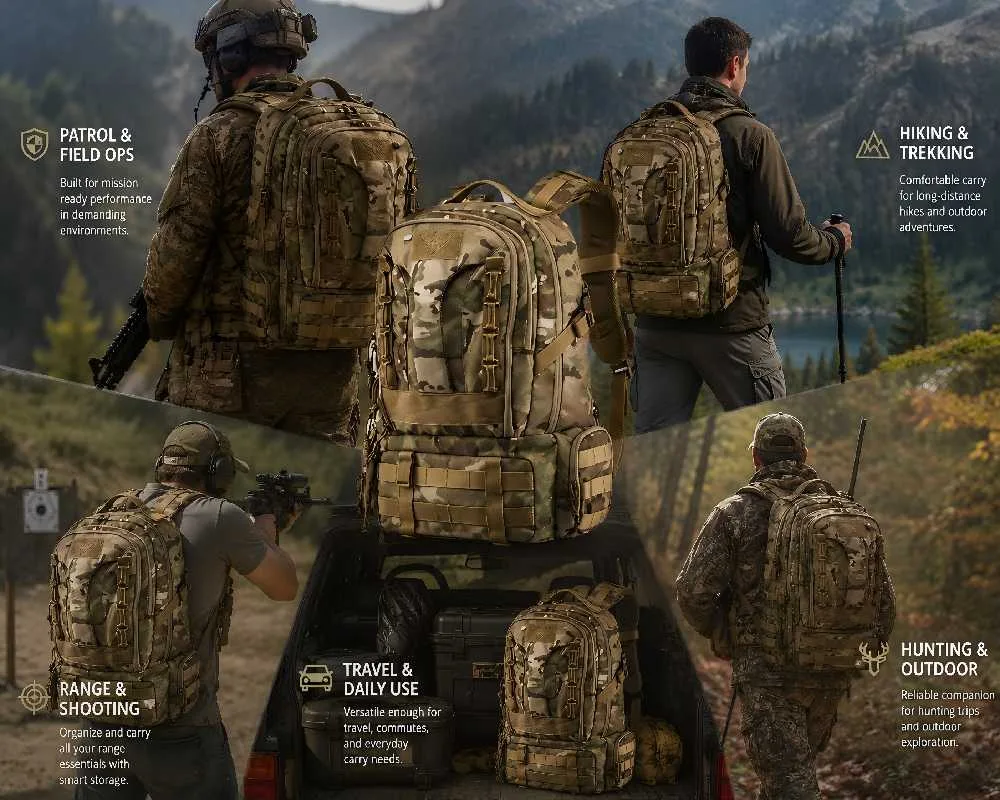
A 30L patrol backpack is commonly specified for police, border patrol, and vehicle-supported operations.
Not sure which size is right for your mission? Read our guide on What Size Tactical Backpack Do I Need.
Common Applications
- Daily patrol missions
- Police operations
- Security response teams
- Border Patrol units
- Vehicle-supported operations
Typical Equipment Load
- Water supply
- Medical kit
- Communications equipment
- Ammunition
- Rain gear
- Personal protective equipment
Procurement Recommendation
30L backpacks are ideal when mobility and rapid response are higher priorities than extended carrying capacity. Explore our Tactical Assault Packs designed for patrol and law enforcement operations.
45L Military Backpack Requirements
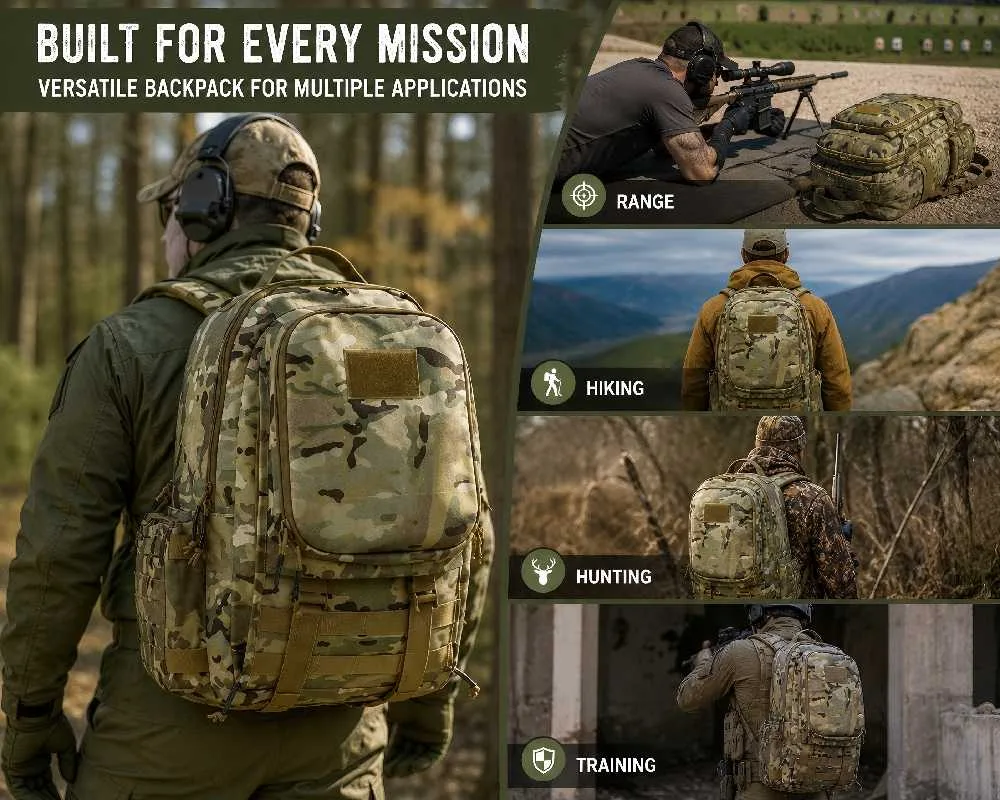
The 45L assault backpack capacity is among the most commonly requested specifications in government tenders.
Common Applications
- Assault operations
- Military training programs
- Field exercises
- Extended patrol missions
- Search and rescue operations
Typical Equipment Load
- 72-hour sustainment supplies
- Additional clothing
- Shelter equipment
- Hydration systems
- Mission-specific gear
Procurement Recommendation
For organizations seeking a versatile backpack for multiple operational roles, a 45L backpack often provides the best balance of capacity and operational flexibility.
Learn the differences between a Patrol Pack and an Assault Pack before defining procurement specifications. Explore our 45L Tactical Assault Packs developed for training and assault missions.
65L Military Rucksack Requirements
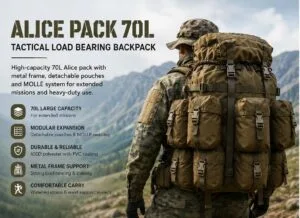
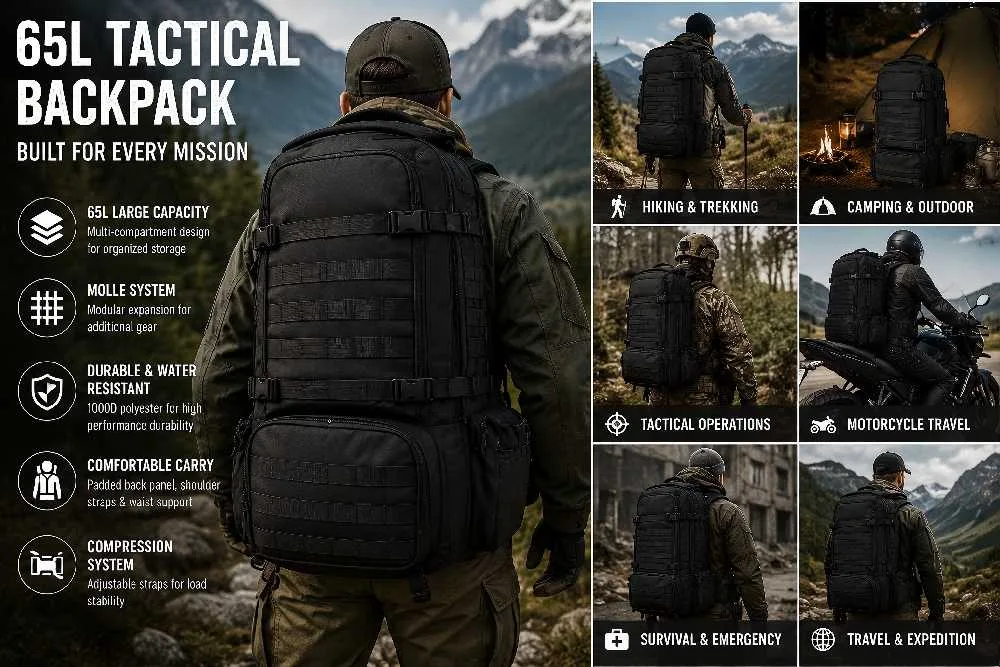
A 65L military rucksack is designed for extended deployment missions requiring multi-day sustainment capability.
Common Applications
- Reconnaissance missions
- Multi-day field operations
- Remote deployments
- Disaster response missions
- Long-range patrol operations
Typical Equipment Load
- Sleeping systems
- Shelter equipment
- Food supplies
- Water purification systems
- Cold weather gear
- Additional mission equipment
Procurement Recommendation
Projects involving extended field operations should prioritize load-bearing performance and suspension systems rather than focusing solely on volume. Explore our Military Rucksacks designed for deployment and sustainment operations.
Common Tender Mistakes
Many military backpack tender requirements fail to define capacity measurement standards, leading to inconsistent supplier proposals.
Specifying Volume Without Measurement Standards
Manufacturers may use different methods to calculate backpack volume.
Ignoring Mission Profiles
Selecting a single backpack size for all personnel often results in inefficient load management.
Using One Capacity For Multiple Units
Different operational units frequently require different carrying capacities.
Focusing Only On Capacity
Volume alone does not determine field performance.
Factors such as suspension systems, frame design, materials, and load-bearing capability are equally important. Backpack volume measurement methods vary between manufacturers. Learn more in Backpack Volume Explained.
Supplier Evaluation Checklist
When evaluating a military backpack supplier or manufacturer, procurement teams should verify more than just stated volume specifications.
Why Supplier Evaluation Matters
Government procurement projects often involve large-volume purchases and long-term supply agreements. Selecting the right military backpack manufacturer helps reduce procurement risk, improve product consistency, and ensure on-time delivery.
Capacity Verification
- Capacity measurement methodology
- Main compartment volume
- Pocket and external storage inclusion
Product Specifications
- Internal dimensions
- External dimensions
- Weight
- Expansion capability
- Hydration compatibility
Durability Requirements
- Material specifications
- Fabric denier rating
- Waterproof performance
- Load-bearing capacity
Supplier Capability
- Production capacity
- Quality control procedures
- Government project experience
- OEM/ODM capability
- Product testing reports
- Compliance certifications
Procurement teams should understand technical specifications beyond capacity. See Military Backpack Specifications Explained.
How To Compare Suppliers Beyond Capacity
Reliable military backpack OEM suppliers should provide documented testing results, material certifications, and production quality procedures.
- Usable storage space
- Load-bearing system design
- Material quality
- Manufacturing consistency
- Testing documentation
- Government project experience
- Production scalability
- After-sales support
The most reliable supplier is not necessarily the one offering the largest stated capacity, but the one providing verifiable performance data and consistent manufacturing quality.
Frequently Asked Questions
How is Military Backpack Capacity Measured?
Military backpack capacity is typically measured in liters. However, different manufacturers may include external pockets, hydration compartments, or expansion sections in their calculations.
Is A 45L Backpack Suitable For A 72-Hour Mission?
In many cases, a 45L backpack provides sufficient capacity for 72-hour operations, depending on mission requirements, climate conditions, and equipment load.
What Should Be Included In Military Backpack Tender Specifications?
Tender specifications should define capacity, dimensions, material requirements, load-bearing performance, hydration compatibility, and testing requirements.
Why Do Two 45L Backpacks Have Different Storage Capacity?
Manufacturers may use different measurement methods and compartment configurations, resulting in different usable storage spaces.
How Should Procurement Teams Evaluate Military Backpack Suppliers?
Procurement teams should evaluate manufacturing capabilities, test documentation, quality control systems, project experience, and production capacity, in addition to backpack specifications.
Related Articles
- How To Compare Tactical Backpack Suppliers
- Military Backpack Specifications Explained
- Backpack Volume Explained: Why Two 45L Backpacks Perform Differently
- What Size Tactical Backpack Do I Need?
- Military Backpack Capacity Guide
Conclusion
Military backpack capacity should always be evaluated according to mission requirements rather than relying solely on advertised volume.
In most procurement projects:
- 30L backpacks support patrol and law enforcement operations
- 45L backpacks support assault and training missions
- 65L+ rucksacks support deployment and extended sustainment operations
By defining capacity requirements correctly and evaluating suppliers beyond volume specifications, procurement teams can improve equipment performance, reduce procurement risks, and achieve better long-term operational outcomes.
Need Help Defining Military Backpack Requirements?
Whether you are preparing government tenders, evaluating military backpack suppliers, or sourcing OEM tactical backpacks, our team can help define specifications, recommend capacity configurations, and support procurement projects.
Explore Tactical Assault Packs →
Explore Military Rucksacks →
Request Procurement Support →