Introduction
Military backpack specifications often form the basis of procurement documents, technical evaluations, and supplier selection processes.
While capacity is one of the most visible requirements, it represents only one aspect of backpack performance. Material selection, load-bearing structures, MOLLE compatibility, hydration integration, and manufacturing quality all influence operational effectiveness.
For organizations involved in military backpack procurement, understanding military backpack specifications helps procurement teams develop clearer requirements, compare suppliers more effectively, and reduce procurement risks.
This guide explains the most important military backpack specifications and requirements to evaluate before issuing tenders, preparing technical requirements, or selecting a military backpack supplier.
Why Specifications Matter More Than Capacity Alone
Many procurement teams focus heavily on backpack volume while overlooking military backpack specifications that directly affect durability, comfort, and long-term performance.
Two backpacks with identical capacity may perform very differently in operational environments depending on their construction, materials, and load-bearing design.
Understanding military backpack specifications helps procurement teams establish clearer military backpack requirements and compare suppliers more effectively.
Durability
Durability determines how well a backpack withstands abrasion, environmental exposure, and repeated field use.
Material quality, stitching methods, and reinforcement points all contribute to service life.
Weight distribution
A properly designed load-bearing system distributes weight across the shoulders, back, and waist, reducing fatigue during extended operations.
Procurement teams should evaluate shoulder-harness design, waist-belt support, and back-panel construction when reviewing military backpack specifications.
Comfort
User comfort directly affects operational effectiveness, particularly during patrol, training, and deployment missions.
Modularity
Modular attachment systems allow personnel to configure equipment layouts according to mission requirements.
Service life
Longer service life reduces replacement costs and improves procurement value over time.
For guidance on selecting the correct backpack capacity before defining specifications, review our Military Backpack Capacity Requirements for Government Procurement guide.
Operational Suitability
Operational suitability refers to how effectively a backpack supports specific mission requirements.
Military backpack specifications should always be evaluated according to operational needs rather than relying on capacity or price alone.
Procurement teams should also understand how capacity claims are measured and verified before evaluating technical specifications.
Capacity Specifications
Capacity is one of the most important military backpack specifications evaluated during procurement projects.
Military backpack requirements should define capacity according to mission duration, equipment load, and operational objectives.
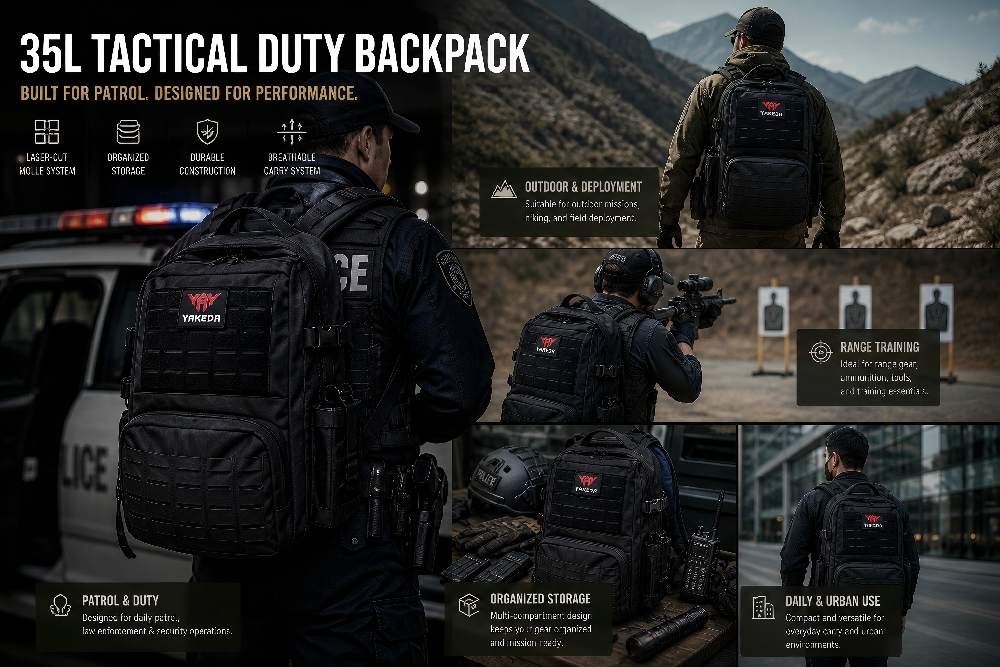
Patrol: 20L–30L
Typically used for daily patrol missions, vehicle-supported operations, and law enforcement activities.
Procurement teams commonly specify this capacity range when mobility and rapid access to equipment are priorities.
Assault: 30L–45L
Suitable for training exercises, assault operations, and 24-72 hour missions.
This capacity range is frequently included in military backpack procurement projects because it provides a balance between carrying capacity and operational mobility.
Reconnaissance: 45L–65L
Designed for extended patrols and reconnaissance activities requiring additional sustainment equipment.
Military backpack specifications in this category typically emphasize load-bearing capability and long-duration comfort.
Deployment: 65L+
Used for multi-day deployment, remote operations, and long-duration missions.
Procurement requirements for this category often include advanced suspension systems, reinforced materials, and higher load capacities.
Understanding how capacity is measured and verified is essential when reviewing military backpack specifications. Learn more in our How Military Backpack Capacity Is Tested And Verified guide.
For a broader overview of mission-based capacity selection, see our Military Backpack Capacity Guide.
Material Specifications
Material selection is one of the most important military backpack specifications because it directly affects durability, weight, weather resistance, and procurement cost.
When developing military backpack requirements, procurement teams should evaluate both fabric construction and protective coating systems.
500D Nylon
500D Nylon offers a balance between durability and weight, making it suitable for patrol and training applications.
Many military backpack suppliers use 500D Nylon when operational mobility and reduced pack weight are priorities.
This material is commonly specified for patrol backpacks, assault packs, and training equipment.
1000D Nylon
1000D Nylon provides superior abrasion resistance and durability for demanding operational environments.
Military backpack specifications that prioritize long service life and heavy-duty performance often include 1000D Nylon as a preferred material.
Although heavier than 500D Nylon, it offers greater resistance to wear, tearing, and environmental exposure.
Polyester
Polyester is a cost-effective option commonly used for commercial and budget-focused procurement projects.
While it generally offers lower abrasion resistance than Nylon, modern polyester fabrics can still provide acceptable performance for training and non-combat applications.
Procurement teams should evaluate fabric weight, coating quality, and durability requirements when comparing polyester-based products.
Coating Specifications
PU Coating
PU coating is commonly used to improve water resistance while maintaining fabric flexibility. It is widely used in military backpack procurement projects where lightweight construction is a priority.
PVC Coating
PVC coating provides enhanced water resistance and structural rigidity. Military backpack manufacturers often use PVC-coated fabrics in environments where equipment protection and durability are critical.
Material Verification During Procurement
Procurement teams should verify fabric specifications through material certifications, test reports, and supplier documentation. Material requirements should define fabric type, denier rating, coating system, and performance expectations to ensure consistent supplier evaluation. Understanding how suppliers should be evaluated can help procurement teams verify material claims more effectively.
MOLLE System Specifications
The MOLLE system is one of the most important military backpack specifications because it directly affects modularity, equipment compatibility, and mission adaptability. Procurement teams should evaluate MOLLE design, attachment strength, and compatibility requirements when comparing military backpack suppliers.
Traditional MOLLE
Traditional MOLLE uses stitched webbing rows that are compatible with standard military pouches, magazine holders, and utility accessories. This design has been widely adopted across military and law enforcement organizations because of its proven reliability and broad compatibility with equipment.
Laser-Cut MOLLE
Laser-cut MOLLE reduces weight and provides a lower-profile appearance while maintaining attachment functionality. Many military backpack manufacturers use laser-cut systems to improve mobility, reduce material weight, and create a cleaner exterior profile.
Attachment compatibility
All attachment points should be evaluated for compatibility with existing equipment systems. Procurement teams should verify that MOLLE spacing, webbing dimensions, and attachment interfaces comply with existing operational equipment requirements.
Reinforcement quality
Stress points should be reinforced to maintain long-term durability. Areas subject to repeated loading, including shoulder strap connections and MOLLE attachment zones, should be inspected for stitching quality and reinforcement methods during supplier evaluation.
MOLLE Verification During Procurement
Procurement teams should verify MOLLE construction through sample inspections, technical drawings, and product testing documentation. MOLLE specifications should clearly define attachment requirements, compatibility standards, and reinforcement expectations to ensure consistent supplier evaluation.
Understanding how suppliers should be assessed can help procurement teams more effectively verify the quality of the MOLLE system.
Load-Bearing System Specifications
A load-bearing system is one of the most critical specifications for military backpacks because it directly affects user comfort, fatigue management, and operational effectiveness.
Even when two backpacks have identical capacity, differences in load-bearing design can significantly affect carrying performance during extended missions.
Load-bearing performance should be evaluated alongside capacity requirements rather than volume alone.
Shoulder harness
The shoulder harness should provide adequate padding and ergonomic support for extended carrying periods.
Procurement teams should evaluate strap width, padding density, adjustment range, and stitching quality when reviewing military backpack specifications.
Back panel
The back panel plays an important role in ventilation, structural support, and overall carrying comfort.
Advanced back panel designs help improve airflow, reduce heat buildup, and maintain load stability during long-duration operations.
Waist belt
A properly designed waist belt transfers a significant portion of backpack weight from the shoulders to the hips.
This reduces user fatigue and improves carrying efficiency, particularly when transporting heavy equipment during deployment or reconnaissance missions.
Sternum strap
The sternum strap improves load distribution and helps stabilize the backpack during movement.
Proper adjustment reduces shoulder strain and improves comfort during patrol, training, and field operations.
Load-Bearing Verification During Procurement
Procurement teams should evaluate load-bearing systems through technical drawings, product specifications, and physical sample inspections.
Key evaluation factors include carrying comfort, weight distribution, adjustment capability, and long-term durability under operational loads.
Supplier evaluation should include both technical specifications and real-world performance assessment
Hydration Compatibility Requirements
Hydration integration is frequently required in military and law enforcement procurement projects.
Hydration compatibility has become an important military backpack specification because it directly affects operational endurance and user convenience during extended missions.
Hydration sleeves
Hydration sleeves should securely accommodate hydration reservoirs without encroaching on the primary storage space.
Procurement teams should verify sleeve dimensions, reservoir retention methods, and compatibility with standard hydration systems.
Tube routing ports
Tube routing ports allow hydration tubes to be routed safely and efficiently while maintaining user mobility.
Military backpack specifications should define the number, placement, and durability requirements of routing ports when hydration compatibility is required.
Reservoir attachment systems
Reservoir attachment systems prevent reservoir movement during operations and help maintain load stability.
Secure attachment points reduce equipment shifting and improve the reliability of the hydration system during field use.
Hydration Capacity Compatibility
Military backpack requirements often specify compatibility with standard hydration reservoirs.
Common requirements include:
• 2L hydration bladder compatibility
• 3L hydration bladder compatibility
Procurement teams should verify reservoir dimensions and attachment systems during supplier evaluation. Capacity planning should also consider hydration requirements when selecting backpack volume.
Hydration Verification During Procurement
Hydration compatibility should be verified through technical documentation, product samples, and physical inspections.
Procurement teams should confirm support for reservoir capacity, routing system design, and integration with other backpack compartments before approving supplier proposals. Understanding how to assess suppliers can help procurement teams more effectively verify the quality of hydration systems.
Weight Specifications
Weight is an important military backpack specification because it directly affects mobility, fatigue management, and carrying efficiency.
However, procurement teams should evaluate backpack weight alongside durability, load-bearing capacity, and mission requirements rather than focusing on weight alone.
| Hydration Verification During Procurement | Hydration Verification During Procurement |
| 20L–30L | 1.0–1.5kg |
| 30L–45L | 1.5–2.2kg |
| 45L–65L | 2.0–3.0kg |
| 65L+ | 3.0kg+ |
Weight should always be evaluated together with load-bearing capability rather than as an isolated specification.
A lighter backpack may improve mobility, but excessive weight reduction can sometimes compromise durability, material strength, or carrying performance.
Military backpack requirements should balance weight, durability, and operational suitability in line with mission objectives.
Capacity requirements should also be considered when evaluating backpack weight and carrying performance.
Weight Evaluation During Procurement
Procurement teams should compare backpack weight using consistent specifications and testing conditions.
Factors such as frame design, material selection, MOLLE construction, and hydration compatibility can all influence overall product weight.
Common Procurement Specification Mistakes
Even well-developed procurement documents can contain specification gaps that create challenges for supplier evaluation.
Understanding common specification mistakes helps procurement teams improve supplier comparisons, reduce procurement risk, and achieve more consistent project outcomes.
Defining capacity without measurement standards
Many procurement projects specify backpack capacity without defining how volume should be measured.
Without a consistent measurement methodology, different suppliers may calculate capacity differently, making direct comparison difficult.
Procurement teams should define capacity measurement requirements whenever volume is a critical specification.
Specifying fabric without performance requirements
Material specifications should include performance expectations rather than fabric names alone.
For example, specifying 1000D Nylon without defining abrasion resistance, coating requirements, or environmental performance may result in inconsistent supplier proposals.
Military backpack requirements should clearly define both material type and expected performance standards.
Ignoring load-bearing systems
Many procurement documents focus heavily on capacity and materials while overlooking load-bearing system design.
Shoulder harnesses, back panels, waist belts, and sternum straps all influence carrying comfort and operational effectiveness.
Ignoring these specifications can result in backpacks that meet technical requirements but perform poorly in field conditions.
Overlooking hydration requirements
Hydration compatibility is frequently required in military and law enforcement applications, but is often omitted from technical specifications.
Failure to define reservoir capacity, routing systems, and attachment requirements can create equipment compatibility issues after procurement.
Focusing only on price
Selecting suppliers based primarily on price can increase long-term procurement risk.
Lower-cost products may use inferior materials, weaker reinforcement methods, or less effective load-bearing systems.
Procurement teams should evaluate total lifecycle value, manufacturing capability, and product suitability rather than relying on price alone.
A structured supplier evaluation process can help procurement teams assess quality, manufacturing capability, and long-term project suitability more effectively.
Military Backpack Specification Checklist
Before issuing a tender or evaluating supplier proposals, procurement teams should verify that all critical military backpack specifications have been clearly defined.
The following checklist can help standardize supplier evaluation and reduce specification ambiguity during procurement projects.
Capacity
- Capacity range
- Capacity measurement method
- Expansion configuration
- Intended mission profile
Materials
- Fabric type
- Fabric denier rating
- Coating system
- Abrasion resistance requirements
Modularity
- MOLLE compatibility
- Attachment points
- Reinforcement quality
Carrying System
- Shoulder harness
- Back panel
- Waist belt
- Sternum strap
Hydration
- Hydration bladder compatibility
- Reservoir capacity support
- Tube routing system
Quality
- Test reports
- Quality control process
- Manufacturing capability
- Sample evaluation records
Organizations evaluating multiple suppliers should use a consistent specification checklist to improve the accuracy of comparisons and procurement decision-making. A structured supplier evaluation process can further improve procurement consistency and supplier selection outcomes.
How Specifications Improve Supplier Evaluation
Clearly defined military backpack specifications create a more objective and consistent supplier evaluation process.
When procurement requirements are documented in detail, suppliers can be compared using the same technical criteria, improving evaluation accuracy and reducing procurement uncertainty.
Compare suppliers consistently
Standardized specifications allow procurement teams to compare supplier proposals using the same evaluation criteria.
When capacity, materials, MOLLE systems, load-bearing structures, and hydration requirements are clearly defined, supplier comparisons become more accurate and transparent.
Reduce ambiguity
Clear technical requirements reduce misunderstandings during tender preparation and supplier evaluation.
Defining measurement methods, material standards, and performance expectations helps ensure that all suppliers respond to the same procurement requirements.
Organizations should also define capacity measurement standards before comparing supplier proposals.
Improve product suitability
Detailed specifications help procurement teams select products that better match operational requirements.
By defining mission-specific requirements, organizations can improve equipment performance and reduce post-procurement compatibility issues. Mission profiles should be considered when selecting backpack capacity and equipment configurations.
Minimize procurement risk
Well-defined specifications reduce procurement risk by establishing clear expectations before supplier selection begins.
Technical requirements, quality standards, and testing documentation help procurement teams identify qualified suppliers and avoid specification-related disputes during project execution. A structured supplier evaluation process can further improve procurement consistency and supplier selection outcomes.
Related Procurement Resources
The following resources provide additional guidance on military backpack capacity planning, specification development, and supplier evaluation.
Capacity Planning
Military Backpack Capacity Guide
What Size Tactical Backpack Do I Need
Backpack Volume Explained: Why Two 45L Backpacks Can Perform Very Differently In The Field
Capacity Verification
How Military Backpack Capacity Is Tested And Verified
Military Backpack Capacity Requirements For Government Procurement