Introduction
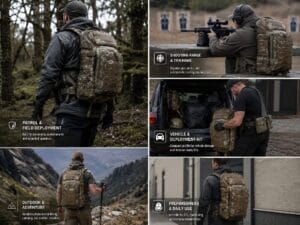
Choosing between a 24-hour pack and a 72-hour pack is one of the most common decisions faced by military personnel, law enforcement teams, and procurement officers. While both backpack types support tactical operations, they are designed for very different mission durations and equipment requirements. Understanding the differences in capacity, mobility, and sustainment capability can help users select the most effective backpack for their mission profile.
Related Resources
• Military Backpack Capacity Guide
• What Size Tactical Backpack Do I Need
Why The Difference Matters
A 24 Hour Pack and a 72 Hour Pack may look similar from the outside, yet they are designed for completely different mission profiles.
Choosing a pack that is too small can leave personnel without critical sustainment equipment, while selecting a larger pack than necessary can reduce mobility and increase fatigue.
Understanding the relationship between mission duration and equipment requirements is the key to selecting the right backpack.
Quick Answer – Which Pack Should You Choose?
A Simple Mission Comparison
Imagine two operators preparing for different assignments.
One is conducting an 8-hour patrol with vehicle support and regular access to supplies.
The other is preparing for a 72-hour field mission with limited resupply opportunities.
Although both require tactical backpacks, their equipment requirements differ significantly.
This difference is exactly why 24 Hour Packs and 72 Hour Packs exist.
Choose A 24 Hour Pack If Mobility Is Your Priority
A 24 Hour Pack is the better choice when missions can be completed within a single operational day, and personnel have access to vehicle support or resupply.
It allows operators to move faster, carry less weight, and maintain greater mobility during patrol missions, law enforcement operations, and training activities.
Choose a 24 Hour Pack if:
- Missions are typically under 24 hours
- Mobility is more important than carrying capacity
- Vehicle support is available
- Overnight sustainment equipment is not required
Related Guide:
• Patrol Pack vs Assault Pack
• 20L vs 30L vs 45L Tactical Backpack
Choose a 72 Hour Pack If Self-Sufficiency Is Required
A 72 Hour Pack becomes necessary when personnel must remain operational for multiple days without reliable resupply.
The additional capacity supports food, water, sleeping equipment, and other sustainment gear required for deployment and extended field operations.
Choose a 72 Hour Pack if:
- Missions exceed 24 hours
- Food and water must be carried
- Personnel must remain self-sufficient
- Deployment readiness is required
- Extended field operations are expected
The Simple Rule
If your mission is measured in hours, choose a 24 Hour Pack.
If your mission is measured in days, choose a 72 Hour Pack.
What Is A 24 Hour Pack?
A 24-hour pack is designed for missions that can be completed within a single operational day without requiring overnight sustainment equipment.
Unlike larger deployment backpacks, a 24-hour pack focuses on mobility, rapid access to equipment, and reduced operator fatigue.
Most military personnel, law enforcement officers, and security teams use 24-hour packs for patrol missions, training exercises, and rapid response operations where speed is more important than carrying capacity.
Typical Capacity
20L–35L
Common Equipment
• Hydration System
• Radio
• Medical Kit
• Ammunition
• Batteries
• Personal Equipment
Typical Missions
• Urban Patrol
• Law Enforcement Operations
• Range Training
• Rapid Response Activities
What Is A 72 Hour Pack?
A 72-hour pack is designed to support personnel operating for multiple days without regular resupply.
Unlike a 24-hour pack, a 72-hour pack prioritizes carrying capacity and sustainment capability over maximum mobility.
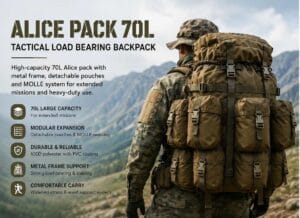
These backpacks are commonly used for field deployments, extended training exercises, remote operations, and missions in which food, water, and shelter equipment must be carried.
Typical Capacity
45L–65L
Common Equipment
• Food Supplies
• Additional Water
• Sleeping System
• Shelter Equipment
• Extra Clothing
• Communications Equipment
• Mission Sustainment Gear
Typical Missions
• Field Deployment
• Extended Training Exercises
• Remote Operations
• Multi-Day Missions
24 Hour Pack vs 72 Hour Pack Comparison Table
| Criteria | 24 Hour Pack | 72 Hour Pack |
| Typical Capacity | 20L–35L | 45L–65L |
| Mission Duration | Up To 24 Hours | Up To 72 Hours |
| Mobility | High | Medium |
| Equipment Capacity | Medium | High |
| Sustainment Capability | Low | High |
| Patrol Missions | Excellent | Moderate |
| Military Training | Good | Excellent |
| Field Deployment | Limited | Excellent |
| Daily Use | Excellent | Limited |
| Vehicle Operations | Excellent | Moderate |
Related Capacity Guides
• How To Choose Backpack Capacity
Equipment Differences
The most significant difference between a 24 Hour Pack and a 72 Hour Pack is not the backpack size itself. The real difference is sustainment capability.
As mission duration increases, personnel must carry additional food, water, clothing, and survival equipment.
This additional load quickly increases capacity requirements and often determines whether a 24 Hour Pack or a 72 Hour Pack is the more practical option.
Typical 24 Hour Pack Loadout
- Hydration System
- Radio
- Medical Kit
- Batteries
- Ammunition
- Personal Equipment
Typical 72 Hour Pack Loadout
- Food Supplies
- Additional Water
- Sleeping Equipment
- Shelter Equipment
- Extra Clothing
- Communications Equipment
- Mission Sustainment Gear
Further Reading
• What Size Tactical Backpack Do I Need
• Military Backpack Capacity Guide
Why Mission Duration Matters
Many users choose backpacks based on capacity numbers alone.
However, mission duration is usually the primary driver of equipment requirements.
As missions become longer, personnel must carry additional water, food, batteries, clothing, and sustainment equipment.
This is why backpack capacity often increases in direct proportion to mission duration. Food requirements
- Water requirements
- Sleeping equipment
- Clothing requirements
- Sustainment capability
As mission duration increases, backpack capacity requirements increase as well.
Procurement Considerations For 24 Hour And 72 Hour Packs
Procurement teams often face the challenge of selecting backpack capacities that support different operational roles.
While issuing a single backpack platform may simplify purchasing and inventory management, it often creates compromises for end users.
Many organizations, therefore, maintain both 24 Hour Packs and 72 Hour Packs to support different mission profiles while maintaining equipment standardization.
Procurement Resources
• Military Backpack Capacity Requirements For Government Procurement
• Military Backpack Specifications Explained
Quick Recommendation
If mobility, speed, and daily operational efficiency are your priorities, choose a 24 Hour Pack.
If deployment readiness, sustainment capability, and multi-day mission support are more important, choose a 72 Hour Pack.
General Rule
- 24 Hour Pack = 20L–35L
- 72 Hour Pack = 45L–65L
Still Comparing Mission Profiles?
• 20L vs 30L vs 45L Tactical Backpack
Recommended Reading
• Military Backpack Capacity Guide
• How To Choose Backpack Capacity
Frequently Asked Questions
Is a 24 Hour Pack Large Enough For Military Training?
Yes. For most military training activities, a 24-hour pack provides sufficient space for hydration systems, communications equipment, medical supplies, and training gear.
Is a 72 Hour Pack Too Large For Daily Use?
In many cases, yes. A 72-hour pack is designed for extended missions and deployment scenarios. For routine patrol duties and daily operations, a 24-hour pack usually provides better mobility and efficiency.
Can a 24 Hour Pack Be Used For Deployment?
A 24-hour pack may support short-duration deployments, but most deployment missions require a 72-hour pack due to increased equipment and sustainment needs.
What is the difference between a 24 Hour Pack And A 72 Hour Pack?
A 24-hour pack focuses on mobility and short-duration missions, while a 72-hour pack prioritizes carrying capacity and sustainment capability for extended operations
Which Backpack Category Matches Your Mission?
For patrol missions, training activities, and rapid response operations, Tactical Assault Packs in the 20L–35L range usually provide the best balance between mobility and carrying capacity.
For field deployment, extended operations, and multi-day missions, Military Rucksacks in the 45L–65L range offer the additional capacity required for food, water, and sustainment equipment.