Introduction
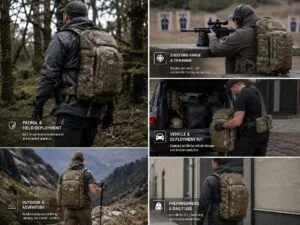
Two operators can carry similar equipment yet require completely different backpack capacities.
A patrol officer working an 8-hour urban shift may only need essential gear and hydration, while a reconnaissance team operating for several days must carry food, water, surveillance equipment, and sustainment supplies.
Choosing the wrong backpack size often leads to either overloaded packs or unnecessary bulk, both of which can reduce operational effectiveness.
Understanding mission requirements is, therefore, the first step in selecting the right military backpack capacity.
Part Of Our Military Backpack Capacity Guide Series
• What Size Tactical Backpack Do I Need
Quick Capacity Recommendations
| Mission Type | Capacity | Typical Duration |
| Urban Patrol | 20L–30L | 8-24 Hours |
| Military Training | 30L–45L | 24-72 Hours |
| Reconnaissance | 45L–65L | 72+ Hours |
| Deployment | 65L+ | Multi-Day |
Need Help Comparing Capacity Options?
• How To Choose Backpack Capacity
What Can Different Military Backpack Sizes Carry?
The following examples illustrate the typical equipment loads associated with each backpack capacity range. Actual requirements may vary depending on mission profile and operational environment.
| Capacity | Typical Equipment |
| 20L–30L | Water, Radio, Medical Kit, Ammunition, Personal Equipment |
| 30L–45L | Additional Clothing, Communications Equipment, Training Gear, Batteries |
| 45L–65L | Optics, Surveillance Equipment, Food Supplies, Additional Water |
| 65L+ | Shelter Equipment, Sleeping System, Sustainment Gear, Multi-Day Supplies |
Related Capacity Guides
• 20L vs 30L vs 45L Tactical Backpack
Urban Patrol Operations
For most urban patrol missions, mobility is usually more important than carrying capacity.
Personnel often operate close to vehicles, support teams, or fixed facilities, meaning excessive storage space rarely provides additional value.
In many cases, carrying a larger backpack simply adds unnecessary weight and reduces agility during routine patrol activities.
Typical Equipment
- Hydration System
- Radio
- Medical Kit
- Ammunition
- Batteries
- Personal Equipment
Recommended Capacity
20L–30L
Why This Capacity Works
A 20L–30L tactical backpack provides enough space for essential mission equipment while minimizing weight and operator fatigue.
Recommended Category
Related Guide
Hydration Packs: Tactical Assault Packs
Military Training Operations
Military training environments often expose one of the biggest backpack selection mistakes: choosing a pack that is too small.
Training exercises frequently require additional clothing, training equipment, hydration systems, and sustainment gear, causing capacity requirements to increase much faster than many users expect.
Typical Equipment
- Hydration System
- Communications Equipment
- Training Gear
- Medical Supplies
- Extra Clothing
- Personal Equipment
Recommended Capacity
30L–45L
Why This Capacity Works
This capacity range provides a balance between carrying capacity and mobility, making it suitable for most military training environments.
Recommended Category
Tactical Assault Packs
Related Guide: What Size Tactical Backpack Do I Need
Reconnaissance Operations
Reconnaissance missions often mark the point at which capacity planning becomes critical.
Unlike patrol operations, reconnaissance teams may operate beyond the reach of immediate logistical support and cannot rely on frequent resupply.
As a result, personnel must balance mobility with the ability to carry additional water, food, optics, and surveillance equipment for extended periods.
Related Guide:
• 24 Hour Pack vs 72 Hour Pack
• Military Rucksack Size Guide
Typical Equipment
- Optics
- Surveillance Equipment
- Communications Systems
- Medical Kit
- Food Supplies
- Additional Water
Recommended Capacity
45L–65L
Why This Capacity Works
Reconnaissance missions require a combination of mobility and endurance. A larger backpack provides the necessary storage without sacrificing operational capability.
- Recommended Category: Military Rucksacks
Multi-Day Deployment Operations
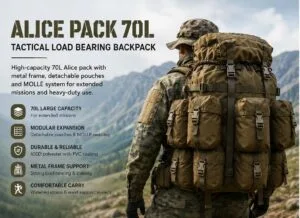
Deployment missions place the highest demands on backpack capacity.
Personnel may need to operate independently for several days while carrying food, water, shelter systems, and mission-specific equipment.
Typical Equipment
- Food Supplies
- Additional Water
- Shelter Equipment
- Sleeping System
- Medical Equipment
- Spare Clothing
- Sustainment Gear
Recommended Capacity
65L+
Why This Capacity Works
Extended deployments require self-sufficiency. Larger military rucksacks provide the volume needed for sustainment equipment and long-duration operations.
Backpack Capacity Planning For Procurement Teams
One challenge faced by procurement teams is deciding whether a single backpack size can support multiple operational roles.
While standardizing equipment can simplify purchasing and inventory management, it often creates compromises for end users.
Capacity planning based on mission profiles usually results in better equipment utilization and improved operational readiness.
| Team Type | Recommended Capacity |
| Patrol Units | 20L–30L |
| Training Units | 30L–45L |
| Recon Teams | 45L–65L |
| Deployment Units | 65L+ |
Further Reading For Procurement Teams
Military Backpack Capacity Requirements For Government Procurement
Military Backpack Specifications Explained
Military Backpack Capacity Comparison Table
| Mission Type | Recommended Capacity | Mobility | Sustainment Capability |
| Urban Patrol | 20L–30L | High | Low |
| Military Training | 30L–45L | Medium-High | Medium |
| Reconnaissance | 45L–65L | Medium | High |
| Multi-Day Deployment | 65L+ | Low | Very High |
Common Backpack Capacity Selection Mistakes
Choosing The Largest Backpack Available
Larger backpacks can reduce mobility and increase operator fatigue during short-duration missions.
Selecting Capacity Based Only On Mission Duration
Equipment load often has a greater impact on capacity requirements than mission length alone.
Ignoring Water And Sustainment Requirements
Additional water, food, and support equipment can significantly increase required backpack capacity.
Procurement Mistake
Standardizing One Capacity Across All Units
Many organizations attempt to use a single backpack size across patrol, training, and deployment teams, resulting in unnecessary compromises.
What If Your Mission Falls Between Two Capacity Ranges?
Not every mission fits neatly into a single backpack category.
For example, a 24-hour field exercise may require more equipment than a patrol mission but less sustainment gear than a deployment operation.
In these situations, equipment load should be prioritized over mission duration.
When in doubt:
Choose the smaller capacity if mobility is critical.
Choose the larger capacity if sustainment equipment is required.
Which Capacity Is Best For Most Military Operations?
If a single backpack capacity must support a wide range of military and law enforcement activities, 30L–45L is generally the most versatile choice.
This range provides sufficient space for patrol operations, training exercises, and tactical missions while maintaining acceptable mobility.
However, specialized missions such as reconnaissance and deployment often require larger backpack capacities.
Still Evaluating Capacity Requirements?
20L vs 30L vs 45L Tactical Backpack
How To Choose Backpack Capacity
Frequently Asked Questions
Before selecting a backpack, many users have similar questions regarding capacity, mission requirements, and operational suitability.
What is the best military backpack size for patrol missions?
Most patrol missions are best served by backpacks in the 20L–30L range.
What Is The Best Backpack Size For Military Training?
For most training activities, 30L–45L provides the best balance between carrying capacity and mobility.
What Size Backpack Is Needed For Reconnaissance Missions?
Reconnaissance teams commonly use backpacks ranging from 45L to 65L, depending on mission duration and equipment requirements.
What Size Backpack Is Best For Multi-Day Deployment?
Most deployment missions require backpacks larger than 65L to accommodate sustainment equipment.
Is A 30L Backpack Enough For Military Operations?
A 30L backpack is sufficient for most patrol missions and short-duration field operations, provided equipment requirements remain limited.
What Is The Most Common Military Backpack Capacity?
The 30L–45L range is generally considered the most versatile capacity for military training, tactical operations, and general field use.
Can A Military Backpack Be Too Large?
Yes. Oversized backpacks can reduce mobility, increase fatigue, and make it more difficult to operate in confined environments.
Is A 45L Backpack Suitable For A 72 Hour Mission?
In many cases, a 45L backpack can support a 72-hour mission if equipment loads remain moderate and resupply opportunities are available.
Recommended Backpack Categories By Mission Type
20L–30L Backpacks
Explore Hydration Packs
Explore Tactical Assault Packs
30L–45L Backpacks
Explore Tactical Assault Packs
45L–65L Backpacks
Explore Military Rucksacks
65L+ Backpacks
Explore Military Rucksacks
Need Help Selecting The Right Military Backpack Capacity?
Whether you are sourcing equipment for military units, law enforcement agencies, or procurement projects, selecting the correct backpack capacity is critical for mission effectiveness.
Our team can recommend the most suitable backpack configuration based on mission duration, equipment requirements, and operational objectives.