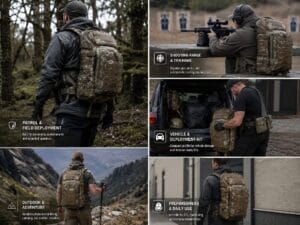
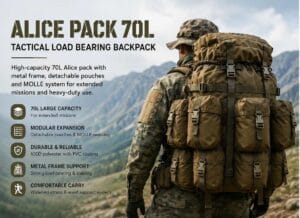
IRR-compliant tactical gear is specified for military, law-enforcement, and government projects where equipment must be evaluated not only for durability, fit, and camouflage color, but also for how externally visible materials behave under relevant night-vision observation conditions. For buyers preparing a tender or OEM brief, IRR/NIR should be treated as a material-and-component requirement rather than a generic product label.
A tactical backpack, plate carrier, or pouch can appear suitable in daylight yet still create abnormal contrast under near-infrared observation if its fabric, webbing, thread, hook-and-loop, zipper tape, or hardware are not specified as part of a coordinated configuration. The practical objective is controlled near-infrared reflectance that is appropriate to the project requirement – not a claim of invisibility.
What Does IRR / NIR Mean in Tactical Gear?
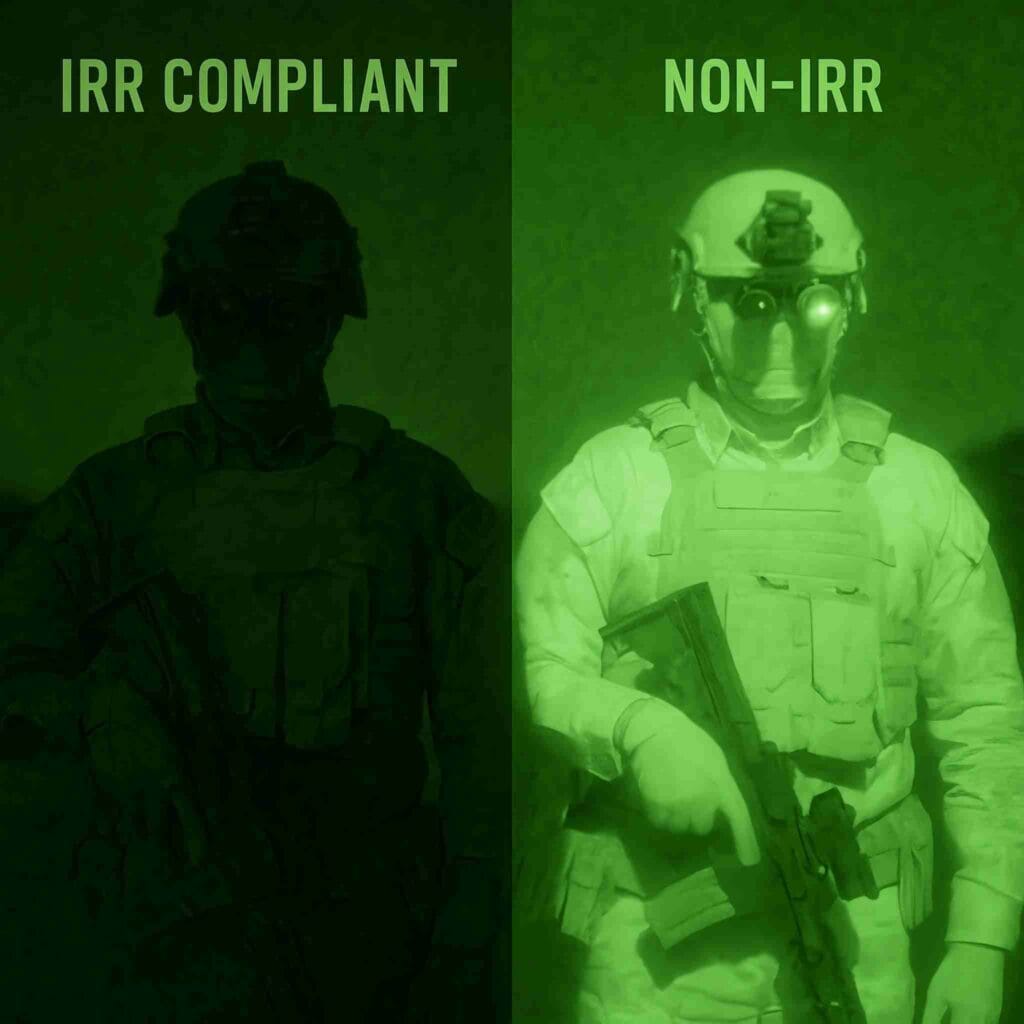
NIR means near infrared, a portion of the electromagnetic spectrum that sits beyond visible red light. In tactical equipment sourcing, IRR is commonly used to describe materials whose near-infrared reflectance is controlled for use in night-vision environments.
The goal is not to make a product ‘reflect as little as possible’ in every situation. The requirement is to avoid abnormal near-infrared contrast relative to the intended environment or the specific reference range defined by a tender, end-user specification, or test method. A camouflage pattern may appear correct to the human eye, yet its dyes, coatings, or trim materials still create an inconsistent NIR appearance.
For that reason, an IRR/NIR requirement should always be linked to the actual product, color, or camouflage pattern, the component scope, and the verification method requested for the project.
Why IRR-Compliant Tactical Gear Matters in Military Tenders
Military tender requirements vary by end user, mission environment, and procurement authority. Where a tender calls for NIR reflectance, infrared camouflage or night-vision-related material performance, the bid must address more than the outer fabric. Procurement teams need to know exactly which exposed components are included, what evidence is available, and how samples will be reviewed before mass production.
This is particularly relevant for load-carrying equipment used during low-light patrol, field training, surveillance-sensitive operations, or night-time deployment. Typical product categories can include plate carriers, tactical vests, backpacks, pouches, belt systems, slings, helmet covers, and field accessories.
For projects requiring coordinated sourcing, sampling, and production control, review our tactical gear manufacturing capability.
IRR / NIR Is Not the Same as Thermal Camouflage
This distinction should be explicit in every tender response and marketing claim. IRR/NIR performance concerns near-infrared reflectance during relevant night-vision observation. Thermal imaging concerns heat-related characteristics such as surface temperature, emissivity, and thermal radiation. These are different technical domains.
An NIR-controlled material configuration may help reduce abnormal contrast under night-vision observation, but it does not automatically prevent detection by a thermal imager. Without separate product-specific thermal evidence, do not describe IRR gear as thermal invisible, anti-thermal imaging, heat-blocking, or undetectable in all conditions.
For the detailed comparison, add an internal link to IRR vs Thermal Imaging: Can NIR-Compliant Gear Reduce Thermal Detection? once that supporting article is published.
What Makes a Tactical Product NIR-Compliant?
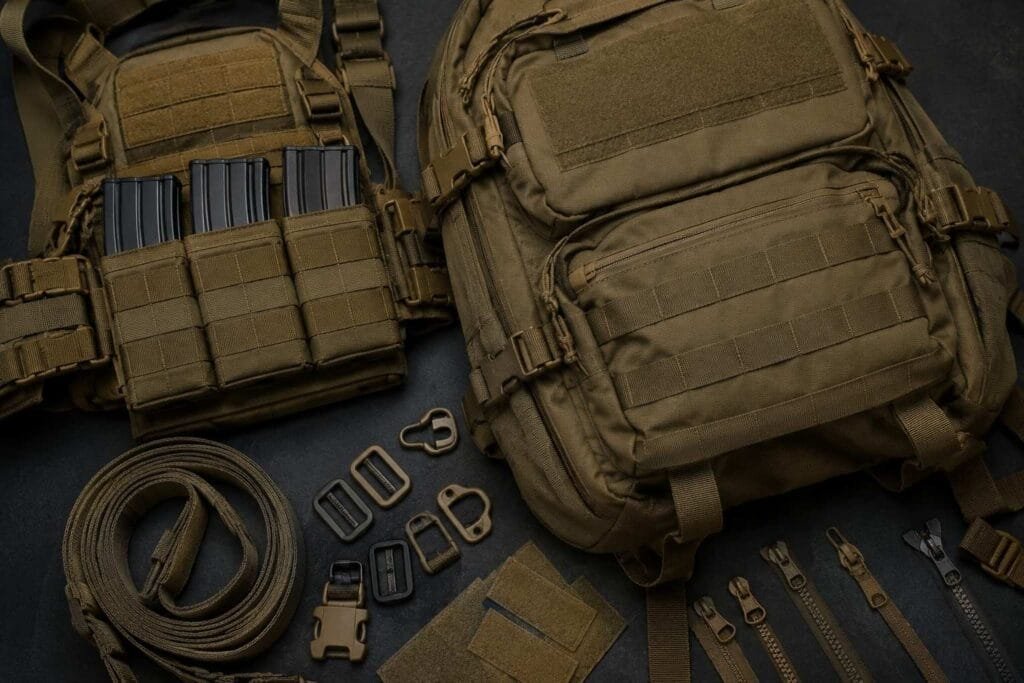
The final product should not be evaluated solely by its main fabric. Every externally visible component can influence the product’s near-infrared appearance. Even a correct shell fabric can be undermined by untreated webbing, contrasting thread, a bright hook-and-loop panel, zipper tape, labels, or hardware.
| Component | Why It Matters | Buyer / Tender Question |
| Main fabric | Largest visible surface area; establishes the base reflectance behavior. | What material, colour or camouflage configuration is proposed? |
| Webbing and straps | MOLLE rows, shoulder straps, and compression straps are highly exposed. | Are the externally visible webbing components included in the NIR requirement? |
| Thread and binding | Contrasting stitching and edge binding can create visible outlines. | Will thread and reinforcement materials be coordinated with the specified configuration? |
| Hook-and-loop and labels | Loop panels, patches, labels and prints can become contrast points. | Which exposed loop, label and logo elements are included or excluded? |
| Zippers, pulls and buckles | Tape, trims and hardware may behave differently from textile surfaces. | What zipper, buckle and hardware options are available for the project? |
The key procurement question is therefore not simply ‘Is the fabric IRR?’ It is: ‘Which externally visible components are included in the NIR-controlled configuration, and how will the specified product configuration be reviewed?’
How NIR Requirements Apply Across Tactical Product Categories
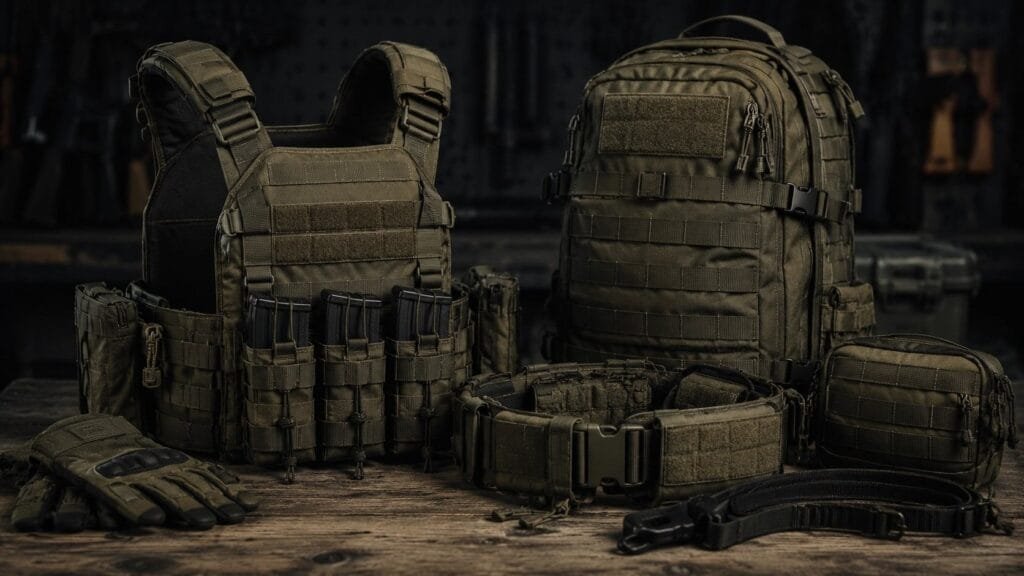
For plate carriers and tactical vests, the exposed surface area often includes carrier fabric, MOLLE webbing, shoulder straps, hook-and-loop fields, buckles, pull tabs, and trim. The project brief should define whether the NIR requirement covers the full load-carrying system or only selected components.
Explore the current tactical vest solutions to identify the product direction before preparing a technical configuration request.
For backpacks, NIR considerations may include shell fabric, compression straps, carry handles, MOLLE panels, zipper tape, zipper pulls, hydration-routing details, reinforcement patches, and external labels. A backpack is not NIR-compliant by default simply because one outer fabric is available in an IRR option.
Review our tactical backpack solutions for patrol, assault, load-bearing, and field-deployment project directions.
For pouches, slings, belts, and accessories, small components can be disproportionately important because they are often mounted on larger systems and remain exposed. Material consistency should be reviewed across the complete configured loadout rather than in isolation.
See the tactical accessories range when defining an integrated equipment configuration.
How to Specify IRR-Compliant Tactical Gear for a Tender or OEM Project
A clear RFQ reduces the risk of approving a visual sample that later fails to meet the intended NIR requirement. The following elements should be defined before sampling begins:
- Product type and mission role: plate carrier, backpack, pouch, belt, sling, helmet cover, or a complete load-carrying configuration.
- Operational environment: woodland, desert, urban, maritime, border patrol, or mixed terrain.
- Color or camouflage requirement: solid color, project-specific print, or approved pattern reference.
- Component scope: main fabric, webbing, thread, binding, hook-and-loop, zipper tape, pulls, buckles, labels, and external prints.
- Verification expectation: material-level data, sample review, laboratory test report, customer inspection, or project-specific declaration.
- Sample approval plan: fabric swatch, component set, prototype, pre-production sample, or controlled comparison requested by the buyer.
- Commercial and delivery parameters: quantity, approved material lead time, documentation requirements, and shipment deadline.
The more precisely these items are defined at the RFQ stage, the more effectively a supplier can coordinate materials, trims, and documentation around the actual project requirement. It also prevents a common procurement failure: approving a product based solely on visible color and later discovering that the exposed component configuration is incomplete.
How Should IRR / NIR Performance Be Verified?
Verification must match the tender requirement. Depending on the project, buyers may request defined NIR reflectance data, test-method information, component-level material details, color or batch controls, sample approval records, or an agreed declaration covering the supplied configuration. Do not treat a generic night-vision photograph as a replacement for formal evidence when the project requires a specific test method or spectral data.
A practical project workflow may include reviewing the specification, confirming the component scope, approving the relevant material set, evaluating the prototype or pre-production sample, and documenting any agreed substitutions before mass production. The appropriate evidence level depends on the buyer’s formal requirements and must be confirmed on a case-by-case basis.
Once published, link this section to How Is IRR Performance Tested? What Military Buyers Should Ask For: a dedicated testing and documentation guide.
Questions to Ask an IRR Tactical Gear Supplier
When comparing suppliers, focus on the project process rather than accepting a broad ‘IRR available’ statement. Useful questions include:
- Which externally visible components can be included in the proposed NIR-controlled configuration?
- What material, color, or camouflage options are available for this product type?
- What project-specific test information, sample review or documentation can be provided?
- How will material, trim, and color consistency be managed after the sample is approved?
- What quantity, lead time, and approval steps apply when the project uses non-standard material combinations?
These questions support a more precise comparison between suppliers and help prevent a technical requirement from being reduced to an unverified marketing phrase.
IRR / NIR Tactical Gear for Tender and OEM Projects
For tender and OEM projects, the requirement should be managed as part of the broader product specification process. This can include material selection, component coordination, sample development, documentation preparation, and delivery alignment. The final configuration should always be confirmed against the customer’s stated requirement before production begins.
To start an IRR-compliant tactical gear project, prepare the product type, quantity, operational environment, color or camouflage reference, material and component expectations, required evidence, and target delivery schedule. This information allows the project team to review whether an appropriate configuration can be proposed.
For a structured RFQ brief, add a future internal link to IRR Tactical Gear RFQ Checklist: Materials, Components and Documentation.
Ready to discuss a military or OEM project? Submit your project requirements with the product type, target quantity, and required material configuration.
FAQ: IRR / NIR Tactical Gear for Procurement Teams
Is IRR the same as NIR-compliant?
In tactical-equipment sourcing, the terms are often used in related contexts. Both point to controlled near-infrared reflectance for relevant night-vision observation conditions. Buyers should still request the exact scope of components, performance requirements, and verification method for the project.
Does IRR-compliant tactical gear prevent thermal imaging detection?
No. NIR reflectance control and thermal signature management are distinct technical areas. Do not describe IRR / NIR gear as thermal camouflage unless separate, product-specific thermal evidence supports that claim.
Is IRR fabric enough to make a backpack or plate carrier compliant?
Not necessarily. Webbing, thread, hook-and-loop, zipper tape, pulls, buckles, labels and other exposed components can affect the finished product’s near-infrared appearance.
Can IRR / NIR options be used for OEM projects?
Yes, where appropriate materials and components can be coordinated for the project. The requirements should be specified before sampling, including product type, color or camouflage, component scope, expected evidence, and approval process.
What should buyers request before placing an IRR order?
Ask for the applicable project requirement, the proposed material and component configuration, available evidence, sample-approval plan, scope of the claim, and delivery implications. Avoid relying on a fabric-only claim when the requirement applies to a finished product.